


06 Nov Whitening Sunscreen Lotion OEM: 5 Claims That Pass Audit
A distributor once sent us three photos of the same whitening sunscreen lotion oem sample: one taken in Miami, one in Hamburg, one in São Paulo. Same formula, same artwork, same SPF 50 claim. In Miami it shipped. In Hamburg the importer held it because the “whitening” wording on the front read like a pigmentation promise the file could not support. In São Paulo the registration consultant asked for a claim rewrite before the ANVISA submission even started. The lotion was excellent. The claims were not exportable.
This is the most common way margin dies in a brightening sun care line, and the category is big enough to take it seriously: global sun care is tracked at USD 16.50 billion in 2025 rising to USD 28.33 billion by 2034 at a 6.19% CAGR, with North America at 36% of value and lotions holding 34% (Fortune Business Insights). Below are the five claim gates a whitening sunscreen manufacturer should walk you through before your artwork goes to print.
Table of Contents
Gate 1: US — Sunscreen Is a Drug, Whitening Is Not
The United States splits your product in two. Sunscreen is always an OTC drug there, governed by the FDA monograph — that part is true regardless of any other claim. A brightening promise is a separate question: under the FD&C Act, wording that affects the structure or function of the body moves a product into drug territory, and FDA maintains it treats “whitening” type claims exactly that way when they promise to alter pigmentation (FDA, Cosmetics Labeling Claims). Appearance-level wording stays cosmetic: “visibly brightens”, “the look of even tone”, “reduces the appearance of dark spots”.
The practical consequence for an spf 50 sunscreen private label programme is one label, two vocabularies: the SPF and water-resistance statements ride the monograph route, and the brightening copy sits in a separate, cosmetic-side block that never claims to treat melasma or inhibit melanin. MoCRA then adds facility registration and product listing on top. A whitening sunscreen lotion oem brief that does not separate those vocabularies will be rewritten by somebody else’s lawyer later, at retail speed.
The 90-second test: send the candidate whitening sunscreen manufacturer your front label draft and ask which words they would change for a US listing. A formulator flags the structure claims; a trader forwards the artwork unchanged.
Gate 2: EU — Cosmetic, but the Words Are Weighted
In the EU sunscreen is a cosmetic under Regulation (EC) 1223/2009, which sounds friendlier until you meet the claims regime. Claims must satisfy the six common criteria of Regulation (EU) 655/2013 — legal compliance, truthfulness, evidential support, honesty, fairness, informed decision-making — and enforcement across the bloc has sharpened on exactly the vocabulary a brightening sun care line wants to use. “Whitening” translated literally reads as a biological alteration of pigmentation; appearance and radiance wording reads as a cosmetic effect. The claim must match the evidence, and ingredient presence alone does not prove a finished-product effect.
Two hard conditions ride along on every whitening sunscreen lotion oem SKU bound for Europe: a UVA protection factor of at least one third of the labelled SPF, and a Responsible Person with a PIF and CPNP notification in place before the first unit ships (Regulation 1223/2009). We set the UVA-PF target before the SPF target for this reason — it is the condition most likely to force a reformulation if it is remembered last.
Gate 3: Brazil — ANVISA Registers the Claim
Brazil regulates sunscreens as personal hygiene products, cosmetics and perfumes of elevated risk, which means the product is registered, not merely notified, and the claim text is part of what gets reviewed. ANVISA operates under RDC 907/2024 with notification and registration handled through a local importer holding an AFE, and labels in Portuguese with INCI names translated. “Whitening” claims on sun care draw scrutiny in review; even-tone and radiance wording on the appearance level passes far more predictably.
The economic layer matters here too, because it changes what a Brazilian buyer will pay for: import duty, IPI and ICMS stack on top of each other, and landed cost often reaches 1.6 to 2.0 times FOB. A sun care compliance plan that survives review once and scales across SKUs is worth more than a cheap first order that gets stuck in registration for a season. We cover the duty stack itself in the sunscreen landed cost guide; this article stays on the claim layer.
Gate 4: One SPF Number, Different Markets
The SPF statement itself is regional. The number is measured in vivo at 2 mg/cm² under ISO 24444 with at least ten subjects, and inter-laboratory variability is significant enough that the same formula can be labelled differently by two accredited labs (PMID 36891187). Korea prints anything above 50 as “SPF 50+”. The US broad-spectrum statement requires a critical wavelength of 370 nm or above. The EU requires the UVA circle only when UVA-PF meets the one-third rule.
So the honest question to a whitening sunscreen lotion oem partner is not “what SPF can you make?” but “which market’s label does this base already pass?”. Our SPF 50 base ships with an in vivo report and a UVA balance profile, and the claim wording is adapted per destination — the formula stays, the vocabulary travels. That is what turns one spf 50 sunscreen private label SKU into a range instead of three separate regulatory projects.
Gate 5: The Claims Copy Deck
Write the label vocabulary once, market by market, and keep it in a claims file that travels with the order documents. The table below is the shape of ours, simplified to one row per claim family.
| Claim family | Cosmetic-side wording (safe) | Wording that triggers review or reclassification |
|---|---|---|
| Brightening | “Visibly brightens”, “the look of even tone”, “radiance” | “Whitening” as a pigmentation promise; “treats melasma”; “inhibits melanin” |
| Protection | SPF value tested to ISO 24444; UVA-PF ≥ 1/3 SPF (EU); broad spectrum CW ≥ 370 nm (US) | “Sunblock”, “all-day protection”, “prevents skin cancer” |
| Texture/skin feel | “Lightweight finish”, “non-greasy feel” | “Repairs skin”, “heals sun damage” |
| Ingredients | Named filters and actives at declared levels | Finished-product effects implied from ingredient reputation alone |
Every claim in the left column is supportable with a test we either hold or can commission: the SPF and UVA reports, an appearance-level consumer or instrumental study for the brightening wording, and the stability file behind the texture claims. That is the paperwork a sun care compliance review actually asks for — not enthusiasm.
MOQ, Testing and Lead Times
Our sunscreen oem moq opens at 3,000 pcs per SKU on the stock 50 ml bottle and a proven SPF 50 base, with breaks at 5,000 and 10,000. Sampling runs 10–15 working days because the SPF statement comes from an accredited third-party laboratory, not from our own chamber; bulk follows 30–35 days after approval and deposit.
| Tier | Unit price index | What changes |
|---|---|---|
| 3,000 pcs | 100 (reference) | Stock 50 ml bottle, proven SPF 50 base, shared filling slot, third-party SPF report shared |
| 5,000 pcs | 92–95 | Printed bottle break, dedicated slot, market-specific claim set, water-resistance testing |
| 10,000 pcs | 82–88 | Reserved component stock, custom pack option, priority pre-summer slot, lower freight per unit |
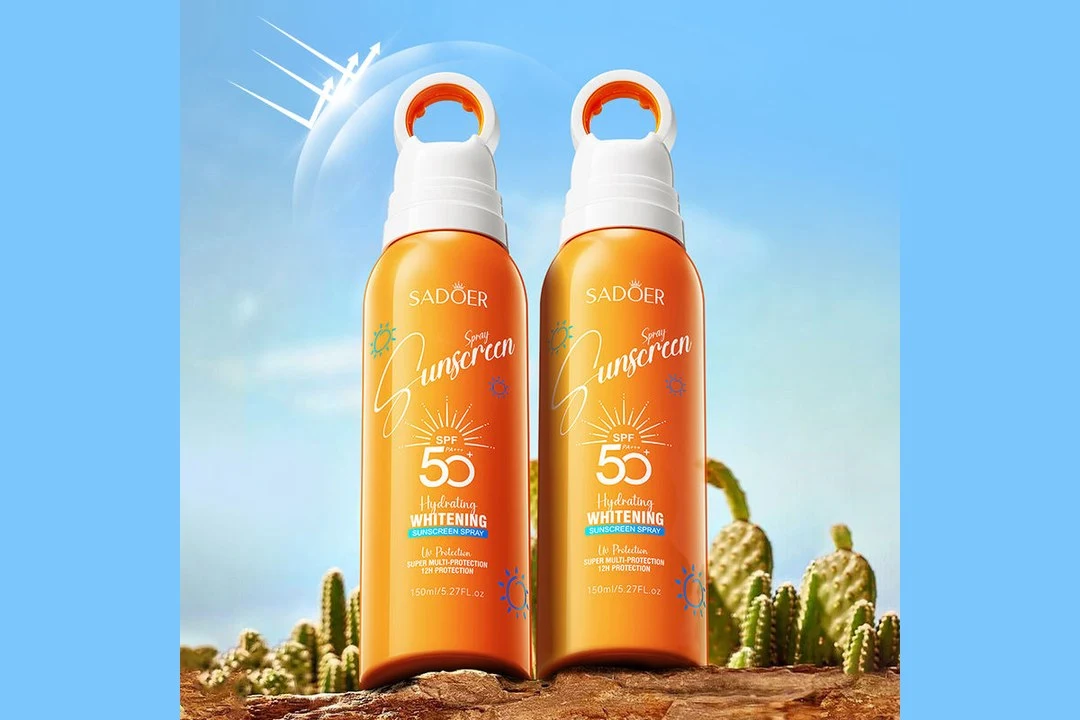
Documents ship as standard with every whitening sunscreen lotion oem order: batch COA, MSDS, the ISO 24444 SPF report, UVA-PF data, photostability and water-resistance summaries, ISO 22716 and GMPC certificates issued to the filling entity, and CPNP or MoCRA listing support per destination. The finished platform is on the whitening sunscreen lotion OEM SPF 50 product page, and the launch sequencing question is covered in the OEM sunscreen launch SKU risk ranking.
FAQ: Claims, Testing and MOQ
Can a sunscreen legally carry a whitening claim?
Depends on the market and the wording. In the US the sunscreen function is an OTC drug and a pigmentation-altering promise would need a drug route, while appearance-level brightening wording stays on the cosmetic side. In the EU the same wording is judged against the 655/2013 common criteria, and in Brazil the claim is registered with ANVISA. A whitening sunscreen lotion oem brief should therefore state target markets first and write the claim set second.
What proof does a brightening claim need?
Appearance-level wording needs appearance-level evidence: an instrumental study (Mexameter or image analysis) or a consumer perception study on the finished product. Mechanism claims about melanin need mechanisms you cannot claim in cosmetics — so we do not write them, which is exactly why our whitening sunscreen manufacturer claim files pass review instead of arguing with it.
What MOQ and lead time should I plan for?
A sunscreen oem moq of 3,000 pcs per SKU on the stock bottle and proven base, breaks at 5,000 and 10,000, 10–15 working days for sampling including third-party SPF testing, then 30–35 days of bulk. Book the testing slot before artwork approval — the report is the long pole in every spf 50 sunscreen private label launch.
Send your target markets and claim draft — we will return a sunscreen quote with the claim review, the ISO 24444 test plan, an MOQ ladder and free samples within 24 hours.
☎ Phone / WhatsApp: +86 133 6440 1300
✉ Email: [email protected]
🕐 Working Hours: Monday – Saturday, 9:00 – 18:00 (GMT+8)
✉ Request the Quote — Reply Within 24h📍 Book a Factory VisitKeep reading: Whitening Sunscreen Lotion OEM SPF 50 · OEM Sunscreen: Landed Cost by Market · OEM Sunscreen: Launch SKU Risk Ranking · Private Label Skin Care Manufacturer: 7-Point Audit
No Comments