

30 Oct Private Label Toner Pads: Top 7 China OEMs 2026
Toner pads went from a Korean niche to a shelf-defining SKU in under three years: 120+ new launches in 2025 alone, and a category now tracked at USD 2.8 billion in 2025 heading to USD 5.6 billion by 2034 at 8.1% a year. Every one of those pads is somebody’s private label toner pads program, and most of them are filled in China. That is why buyers now shortlist seven distinct supplier profiles rather than one product page.
This is the shortlist we hand brands entering the category: five criteria that decide quality, seven supplier profiles you will actually meet, the MOQ ladder to expect, and twenty questions that separate a real toner pads manufacturer from a trading office with a rented warehouse. Use it before you ask for a price.
Table of Contents
Why Private Label Toner Pads Became a Global SKU
Asia-Pacific holds 41.3% of the toner pad market at roughly USD 1.16 billion, South Korea alone accounts for about 18% of global value, and China is the fastest-growing market inside the region at a 10.4% compounding rate driven by cross-border e-commerce and live-stream retail (Market Intelo). North America follows at 27.6%, where men’s toner pads are growing close to 11% a year.
The format explains the pull. A pad carries a measured dose of essence, exfoliates one side and hydrates the other, and removes the guesswork from a step consumers used to skip. Exfoliating pads alone hold about 51% of category value, which is why almost every toner pad private label brief we receive specifies a dual-texture pad rather than a plain cotton square.
5 Criteria That Decide Toner Pad Quality
Pads are a component business before they are a formula business. Score a private label toner pads supplier on these five points and the cheap quote stops looking cheap. Any toner pads manufacturer quoting one flat price across pad formats is hiding a component minimum somewhere in the number.
| # | Criterion | What to confirm in writing |
|---|---|---|
| 1 | Pad substrate | Material (cotton, rayon blend, cellulose, hydrogel), gsm, emboss depth and die-cut size; ask for the substrate spec sheet, not a photo |
| 2 | Essence load | Grams of essence per pad and per jar; ±0.3 g fill tolerance is achievable, ±1 g is not a controlled process |
| 3 | Jar and seal | Food-grade PP jar, induction or pressure seal, dessicant where needed; a loose snap lid bleeds essence in transit |
| 4 | Preservative and pH | Challenge test (PET) on the finished pad, pH 4.5–5.5 for acid pads; a pad is a wet system and needs its own preservation file |
| 5 | Filling capacity | Pads per minute, jar sealing line, and whether pads are saturated in-house or bought pre-soaked from a converter |
Criterion five is the one brands skip. A factory that saturates pads in-house controls the essence load, the pH and the batch record; a factory that buys pre-soaked pads controls none of them. Ask which of the two you are talking to, and for an exfoliating toner pads oem program with an acid system, only the first answer is acceptable.
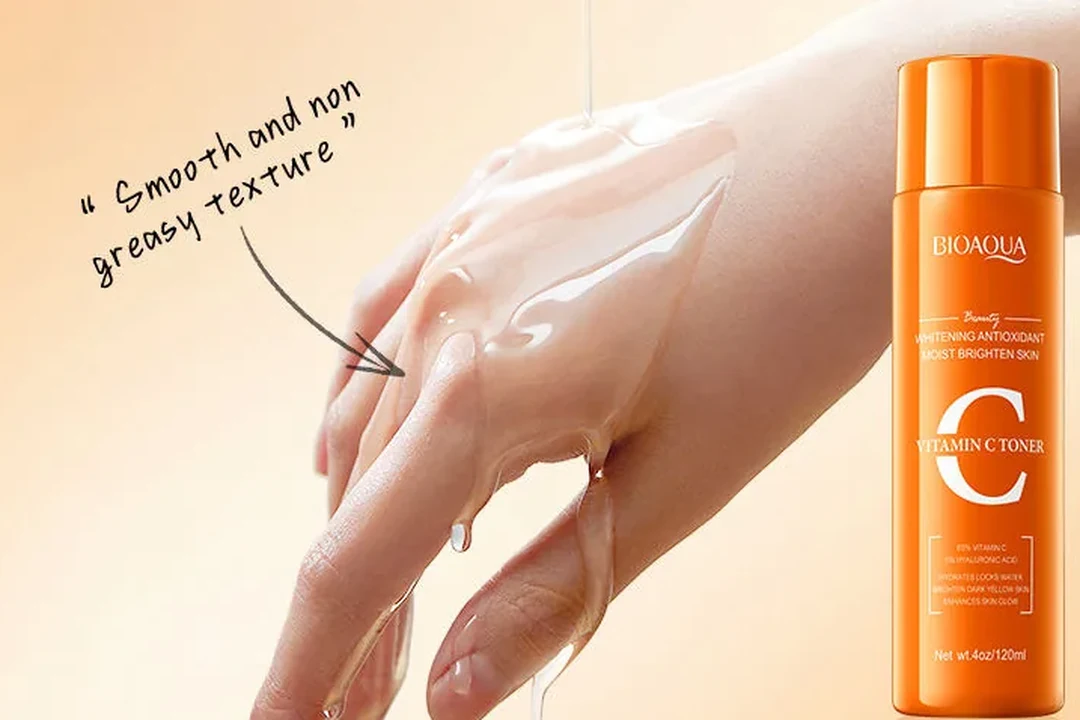
Pack compatibility runs alongside. If your pad is a pre-moistened sachet or a wipe-format product, the same filling discipline applies as on our grapefruit makeup remover sachets line; if the pad sits in a toner-plus-pad routine, the essence chemistry has to match the vitamin C face toner OEM base your brand already sells.
The 7 Private Label Toner Pads Supplier Profiles in China
We are not going to name competitors, and a list of logos would tell you nothing. What helps is knowing the seven profiles a private label toner pads buyer meets in Guangzhou, Shanghai and Hangzhou, what each is genuinely good at, and what to verify before signing.
| # | Profile | Strength | Verify this |
|---|---|---|---|
| 1 | Facial mask converter | Fast pad die-cutting, huge substrate library, low tooling cost | Whether they fill and seal in-house or only convert |
| 2 | Full-service OEM/ODM | Formula, filling, jar, carton and compliance under one roof | Per-SKU PIF and CPNP capacity, not just ISO certificates |
| 3 | Essence house with pad add-on | Strong serum and ampoule chemistry, credible actives | Pad substrate sourcing and fill tolerance on a wet system |
| 4 | Wet-wipe specialist | Saturation, seal integrity, foil sachet experience | Cosmetic-grade preservation and label compliance |
| 5 | Jar and component maker | In-house moulding, tight jar tolerances, low component MOQ | Who fills the jar for you, and where the batch record lives |
| 6 | K-beauty licensed line | Korean-style formulas and pack aesthetics | Whether the Korean origin claim survives customs scrutiny |
| 7 | Trading company | Wide catalogue, quick quotes, small trial orders | Factory audit rights, batch traceability, who signs the COA |
The 90-second test: ask any of the seven profiles for the fill record of one toner pad jar — essence grams, pad lot number, sealing date. Profiles 1, 5 and 7 will send a price list instead. That answer is worth more than a factory tour.
Profile two is where most serious korean toner pads wholesale programs end up, because the compliance load grows with the SKU count: a pad is a wet cosmetic with its own preservation dossier, and each market wants a different signature on it. An exfoliating toner pads oem brief with an acid system also needs a PET challenge test on the finished pad, not on the essence alone. A supplier that cannot produce a per-SKU file will hand you a customs problem in your best market.
MOQ, Sampling and Certification to Compare
Toner pad MOQs are driven by the jar and the pad die, not by the essence. Expect a private label toner pads quote to open around 3,000 jars on a stock formula, with breaks at 5,000 and 10,000; single-unit sachet formats start higher because the sealing line runs slower. A korean toner pads wholesale program that mixes two jar sizes should budget a separate filling slot for each, because the line does not switch formats for free.
| Tier | Unit price index | What changes |
|---|---|---|
| 3,000 jars | 100 (reference) | Stock formula, stock jar, shared saturation slot, tests amortised on the smallest run |
| 5,000 jars | 88–92 | Jar and label price break, dedicated saturation slot, custom emboss on the pad |
| 10,000 jars | 76–84 | Reserved component stock, priority line slot for season orders, dedicated batch plan |
Sampling runs 7–10 working days on a stock formula and 15–20 on a custom brief, including pad emboss and essence adjustment. Bulk follows 30–35 days after sample approval and deposit. Certificates to ask for by name: ISO 22716 and GMPC issued to the filling entity, FDA facility registration for the US, CPSR plus CPNP capacity for the EU, and halal-capable segregated filling if Indonesia or the Gulf is on your list.
20 Questions Before You Place a Toner Pad Order
Send these as a written list. The speed and specificity of the replies tell you more about a toner pads manufacturer than any catalogue.
- Which substrate, gsm and emboss pattern do you hold in stock, and what is the die MOQ for a custom emboss?
- How many grams of essence per pad, and what is the fill tolerance?
- Do you saturate in-house? Show the saturation line and the batch record format.
- Has a PET challenge test been run on this exact pad-and-essence system?
- What is the pH range and how is it checked per batch?
- Which jar and lid do you recommend for a 60-pad count, and is the seal induction or pressure?
- Can you run a 45°C, 12-week stability with the jar on its side?
- What is the actual MOQ for a custom essence on a stock pad?
- What is the MOQ for a custom jar colour or print?
- How long does artwork proofing take, and who checks the barcode?
- Which certificates are issued to the filling entity, with the entity name on them?
- Can you supply a PIF and CPSR for the EU, and who signs as assessor?
- Are you FDA-registered as a facility, and is the registration number shareable?
- Can the line run segregated halal-capable slots, and is that documented?
- What is the essence fill weight variation across the last ten batches?
- How do you control pad discolouration over a 24-month shelf life?
- What happens to my formula if I reorder in twelve months?
- Which cartons and pallet configuration do you use, and what is the CBM per 1,000 jars?
- Who is my named engineer and merchandiser, and how often do I get production photos?
- Can I see a redacted batch record for a pad SKU you already ship?
Question twenty is the audit in miniature. A real toner pad private label supplier answers it in a day with a redacted record; a broker answers it with silence and a discount.
What Our Toner Pad Line Can Do
We are a Guangzhou-area OEM/ODM factory that fills wet systems and sets in-house, so the list below is what we can commit to in writing, not a wish list. If a line item does not fit your toner pad private label program, we say so at quoting stage rather than after the deposit.
| Item | What we commit to |
|---|---|
| MOQ ladder | 3,000 / 5,000 / 10,000 units per SKU, with price breaks at each step |
| Sampling | 7–10 working days on a stock formula, 15–20 on a custom brief |
| Bulk production | 30–35 days after sample approval and deposit |
| Certification | ISO 22716, GMPC, FDA facility registration; CPRS/CPNP dossier support, halal-capable segregated filling |
| Formats | 60-pad jars, 5-pc and 10-pc sachet packs, toner-plus-pad routines and essence refills |
| Documents | Batch COA, MSDS, stability summary, label review, export pack with HS 3304.99 |
Adjacent SKUs share the same line discipline, which is why brands often build the whole cleansing step with us: a caffeine retinol cleanser OEM upstream of the pads, and a private label skin care manufacturer audit covering the rest of the routine. One factory, one batch-record language, one compliance folder.
FAQ: MOQ, Samples and Documents
What is the MOQ for private label toner pads?
Around 3,000 jars per SKU on a stock formula with price breaks at 5,000 and 10,000; a custom essence or custom pad emboss pushes the entry point up. Ask which component is driving the number before you negotiate.
How fast can I get samples of a toner pad?
7–10 working days from a stock formula, 15–20 from a custom brief, with the second round free when the change is factory-side. Bulk then runs 30–35 days after approval and deposit.
Which documents ship with a toner pads order?
Batch COA, MSDS, stability summary, label review, ISO 22716 and GMPC certificates, plus the dossier your importer needs for CPNP, MoCRA, ANVISA or BPJPH filing. Every private label toner pads shipment leaves with the same folder.
Send your pad format, essence brief and target market — we will return a supplier-profile comparison, an MOQ ladder and free stock-formula samples within 24 hours.
☎ Phone / WhatsApp: +86 133 6440 1300
✉ Email: sales@moksha-bio.com
🕐 Working Hours: Monday – Saturday, 9:00 – 18:00 (GMT+8)
✉ Request the Quote — Reply Within 24h📍 Book a Factory VisitKeep reading: Vitamin C Face Toner OEM 120ml · Grapefruit Makeup Remover Sachets OEM · Caffeine Retinol Cleanser OEM 100g
No Comments