

31 Oct Private Label Peel-Off Mask: Top 7 USA OEMs 2026
Peel-off masks went from a drugstore novelty to a category with real money in it: USD 2.53 billion in 2025, projected to USD 4.23 billion by 2034 at a 5.88% CAGR (The Insight Partners), with charcoal variants holding about 38.5% of product-type share and men’s grooming growing near 9% a year. For a US buyer, every one of those tubs is somebody’s private label peel off mask program — and the supplier landscape looks completely different from toner pads or sheet masks.
This is the shortlist logic we hand US brands: five criteria that decide whether the film actually peels, seven supplier profiles you will meet on the US and China supply routes, the MOQ ladder to expect, and the audit questions that separate a real peel off mask manufacturer from a filler renting a slot. Use it before you compare prices.
Table of Contents
Why the US Is the Peel-Off Market to Win
North America is the anchor region for the category — the US alone is tracked as the key growth market for peel-off formats, and US retail is where single-use sachet packs and viral TikTok removal videos convert best. Charcoal dominates the ingredient story at roughly 38.5% of product-type share, followed by gold, vitamin C and collagen variants (Dataintelo). For a private label peel off mask brand, that means the ingredient story is already set by the market — what you compete on is film quality and landed cost.
The format explains the pull: one application, a visible ten-minute result, and a removal moment that photographs well. But the same visibility makes QC failures public — a mask that tears on removal or leaves residue generates video reviews a peel off mask private label brand cannot delete. That is why the criteria below are about film mechanics first and actives second, and why a generic facial mask oem quote is not the same thing as a peel-off quote.
5 Criteria That Decide Peel-Off Quality
Score any private label peel off mask supplier on these five points and the cheap quote stops looking cheap. A factory that cannot answer point one in writing is a filler, not a formulator.
| # | Criterion | What to confirm in writing |
|---|---|---|
| 1 | Film-former system | PVA/PVP/alginate ratio, dry-down time to a peelable film, and whether the system is solvent or water based |
| 2 | Dry-down and removal | 10–15 minute peel window, removal integrity across a full face, zero residue on a standard skin model |
| 3 | Preservation and pH | PET challenge test on the finished tub, pH 5.0–6.5, 24-month stability with the cap on |
| 4 | Claims and pack copy | Cosmetic-level claims only (purifies, refines, blackhead look removal); no drug language that trips FDA review |
| 5 | Filling and pack format | Tub with spatula, single-use sachet, or squeeze tube; induction seal and fill tolerance per unit |
Criterion two is where reputations are made. A peel-off film is a rheology product: too little polymer and it tears in patches, too much and it never dries inside the promised window. Ask any peel off mask manufacturer for the dry-down curve and a removal video from a production batch, not a lab sample.
The 7 Supplier Profiles for US Buyers
We will not name competitors, and a logo list would tell you nothing. What helps is knowing the seven profiles a US buyer meets, what each is genuinely good at, and what to verify before signing a private label peel off mask supply agreement.
| # | Profile | Strength | Verify this |
|---|---|---|---|
| 1 | US contract manufacturer | Domestic lead times, FDA facility in network, retail audits easy | Film-former capability in-house, or do they buy the base? |
| 2 | US private label house | Stock formulas, low entry MOQs, fast reorder | Who actually fills, and where the batch record lives |
| 3 | China full-service OEM/ODM | Formula, filling, tub, carton and compliance under one roof at scale | Per-SKU PIF/CPNP capacity, ISO 22716 to the filling entity |
| 4 | K-beauty style converter | Trend-led textures, charcoal and gold variants, fast art | Claims documentation and US FDA cosmetic-vs-drug review |
| 5 | Component specialist | Tub, spatula, induction seal, low component MOQ | Who fills the tub, and cross-contamination controls |
| 6 | Clean-beauty boutique lab | Natural film-formers, fragrance-free systems | Scale: can they hold fill tolerance at 10,000 units? |
| 7 | Trading company | Wide catalogue, quick quotes | Factory audit rights, traceability, who signs the COA |
The 90-second test: ask any profile for the dry-down curve and one redacted batch record from a charcoal SKU they already ship. Profiles 2 and 7 send a price list instead. That answer is worth more than a factory tour.
Most serious charcoal peel off mask wholesale programs for the US market end up split: a China OEM runs the volume SKU at a third of the landed cost, while a domestic filler covers the fast-turn limited editions. The compliance file travels with the formula either way, which is why the audit in our private label skin care manufacturer checklist applies to both routes.
MOQ, Sampling and Certification to Compare
Peel-off MOQs are driven by the tub and the induction seal, not by the formula. A private label peel off mask quote on a stock charcoal base opens around 3,000 tubs, with breaks at 5,000 and 10,000; single-use sachets run on faster lines and price differently.
| Tier | Unit price index | What changes |
|---|---|---|
| 3,000 tubs | 100 (reference) | Stock tub and cap, stock formula, shared filling slot, tests amortised on the smallest run |
| 5,000 tubs | 88–92 | Printed tub price break, dedicated slot, custom spatula colour |
| 10,000 tubs | 76–84 | Reserved component stock, priority season slot, custom tub tooling amortised, dedicated batch plan |
Sampling runs 7–10 working days on a stock formula and 15–20 on a custom film system, bulk 30–35 days after approval and deposit. Treat the private label peel off mask ladder as a component conversation, not a formula one: the tub, the induction seal and the spatula set the entry point. Certificates to ask for by name: ISO 22716 and GMPC issued to the filling entity, FDA facility registration plus MoCRA listing support for the US, CPSR and CPNP capacity if the EU is on your roadmap, and halal-capable segregated filling for Gulf and Indonesia programs.
Audit Questions Before You Place the Order
Send this list before you sign. On a private label peel off mask program the answers matter more than the quote, because the film either holds at 80% humidity or it does not.
- What is the film-former system, and is it solvent or water based?
- What is the documented dry-down window, and does it hold at 80% humidity?
- Has a PET challenge test been run on this exact tub-and-formula system?
- What is the pH range and how is it checked per batch?
- Which claims have you cleared for the US market, and who reviewed the pack copy?
- Which certificates are issued to the filling entity, with the entity name on them?
- Are you FDA-registered as a facility, and can you support MoCRA product listing?
- What is the fill tolerance per tub across the last ten batches?
- Can you run a 45°C, 12-week stability with the tub standing and on its side?
- Can I see a redacted batch record for a peel-off SKU you already ship?
What Our Peel-Off Line Can Do
We are a Guangzhou-area OEM/ODM factory that formulates and fills film systems in-house, so the list below is what we commit to in writing for a peel off mask private label program — not a wish list. If a line item does not fit, we say so at quoting stage rather than after the deposit.
| Item | What we commit to |
|---|---|
| MOQ ladder | 3,000 / 5,000 / 10,000 units per SKU, with price breaks at each step |
| Sampling | 7–10 working days on a stock formula, 15–20 on a custom film system |
| Bulk production | 30–35 days after sample approval and deposit |
| Certification | ISO 22716, GMPC, FDA facility registration; CPSR/CPNP dossier support, MoCRA listing support, halal-capable filling |
| Formats | 100–120 g tubs with spatula, single-use sachets, squeeze tubes, charcoal/gold/clay variant families |
| Documents | Batch COA, MSDS, stability summary, label review, export pack with HS 3304.99 |
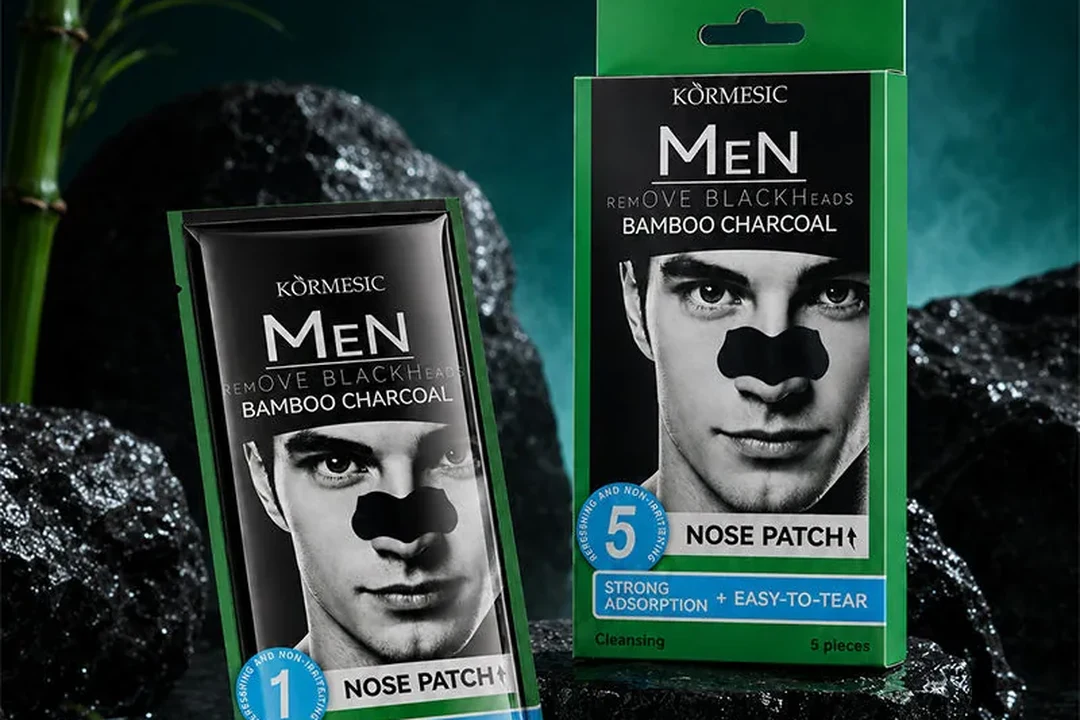
Adjacent purifying SKUs share the same line discipline, which is why brands often build the whole detox story with us: the turmeric clay face mask OEM for the rinse-off segment, the peach bubble clay mask OEM for the oxygenating trend, and the bamboo charcoal nose patch OEM for the T-zone add-on. One factory, one batch-record language, one compliance folder — the same standard our wider facial mask oem line runs on.
FAQ: MOQ, Samples and Documents
What is the MOQ for a private label peel off mask?
Around 3,000 tubs per SKU on a stock formula, with breaks at 5,000 and 10,000. A custom film system or custom tub tooling usually starts at 5,000, because each carries its own minimum.
How fast can I get samples of a peel-off mask?
7–10 working days from a stock formula, 15–20 from a custom film brief, with the second round free when the change is factory-side. Bulk then runs 30–35 days after approval and deposit.
Which documents ship with a peel-off mask order?
Batch COA, MSDS, stability and PET challenge summaries, label review, ISO 22716 and GMPC certificates, plus the dossier your importer needs for MoCRA, CPNP or ANVISA filing. Every private label peel off mask shipment leaves with the same folder.
Send your film brief, tub format and target market — we will return a supplier-profile comparison, an MOQ ladder and free stock-formula samples within 24 hours.
☎ Phone / WhatsApp: +86 133 6440 1300
✉ Email: sales@moksha-bio.com
🕐 Working Hours: Monday – Saturday, 9:00 – 18:00 (GMT+8)
✉ Request the Quote — Reply Within 24h📍 Book a Factory VisitKeep reading: Turmeric Clay Face Mask OEM 120g · Peach Bubble Clay Mask OEM 100g · Bamboo Charcoal Nose Patch OEM 5-Pc
No Comments