


04 Nov ODM Skincare Manufacturing: Process, MOQ and Cost
ODM Skincare Manufacturing: Process, MOQ and Cost
Searches for odm skincare manufacturing grew quietly through 2026, and most of that traffic never finds a page that actually answers it. Buyers type the phrase when they already know they do not want to build a formula from scratch: they want a factory that owns finished formulations, adapts them to the brand, and ships bulk orders on a predictable calendar. This page is the straight version — what the model covers, how the process runs, what it costs, and where buyers get burned.
Quick definition so we are using the same words. In odm skincare manufacturing, the factory owns the formulation library, the packaging supply chain and the compliance file set; you choose from proven bases, adjust shade, scent, actives and packaging, and sell under your brand. In OEM, you bring the formula and the factory executes it. ODM is faster to market and cheaper to start; OEM gives you deeper formula ownership. Most emerging brands — and most of the buyers who visit this site — belong in ODM first.
Table of Contents
What ODM Skincare Manufacturing Covers
A serious ODM partner hands you four things together. First, a formulation library: stock bases for serums, creams, cleansers, masks and body care that already passed stability and challenge testing. Second, packaging engineering: bottles, jars, tubes, sachets and cartons sourced at production volumes a single brand cannot reach alone. Third, the regulatory file: formulation breakdowns, safety assessments and CPNP or MoCRA documentation support for the destination market. Fourth, the production calendar — the honest version of odm skincare manufacturing is mostly calendar management, because the chemistry is the repeatable part.
What a good ODM factory does not do is pretend every request is a one-line change. If you want a vitamin C derivative swapped for another at a higher dose, the stability curve changes, the packaging compatibility changes, and the test matrix runs again. The factories worth signing are the ones who tell you which requests are cheap and which ones restart the clock.
The Process From Brief to Bulk Delivery
The working sequence has seven steps. One: brief — category, claim targets, market, price band. Two: base selection from the library, usually two or three candidates. Three: sampling, with stock-base samples going out in 24–48 hours and custom ODM adjustments in 7–10 days. Four: sample rounds and sensory tweaks. Five: packaging decision, including artwork, printing method and component lead times. Six: compliance file assembly for the destination market. Seven: bulk production, 30–35 days from sample approval and deposit, then QC and shipment.
Two timelines decide everything: the sampling loop and the packaging lead time. A buyer who freezes artwork in week two ships on schedule; a buyer who redesigns the carton in week six adds a month. When you evaluate odm skincare manufacturing quotes, ask the supplier to state both numbers in writing — vague answers here are where delivery dates die.
ODM vs OEM: Which Model Fits
ODM fits brands that need shelf presence inside one or two seasons and want the factory to carry formulation risk. OEM fits brands with an existing hero formula, a brand chemist on staff, or a marketing story built around proprietary ingredients. There is also a middle path most buyers miss: start ODM with a stock base, and move your best seller to full OEM once volume justifies dedicated development. If you want the deeper version of that math, our private label skin care manufacturer cost breakdown walks the full ladder.
MOQ and Lead Times
Minimums in odm skincare manufacturing track the packaging, not the chemistry. The chemistry is mixed in kettles; the cost driver is how many printed components the line must run before changeover makes sense. Standard ladders look like this:
| Format | Typical MOQ | Sampling | Mass Production |
|---|---|---|---|
| Tubes / bottles 15–99 ml | 3,000 pcs | 7–10 days | 30–35 days |
| Jars and small formats under 15 ml | 5,000 pcs | 7–10 days | 30–35 days |
| Large formats 100 ml and above | 1,000 pcs | 7–10 days | 30–35 days |
| Sachets / count packs | 5,000 pcs | 5–7 days | 25–30 days |
Treat any quote that promises one flat MOQ across all formats with suspicion — it usually means the stock packaging is whatever the factory has too much of. Ask which parts are stock components (fast, cheap) and which are custom molded (slow, tooling fees). Both answers are legitimate; the bad version is finding out after the deposit.
Where the Money Goes
An ODM unit cost splits into five lines. Formula and actives are usually the smallest — a proven base with 1–2% active dosing costs less than buyers expect. Primary packaging (bottle, pump, jar) is typically the largest single line. Printed components and cartons come next, driven by color count and finishing. Fill, assembly and QC labor is stable across projects. Compliance and testing amortize across the run — the per-unit share falls fast as volume rises, which is why stretching a 3,000-piece run to 5,000 often moves the unit price more than negotiating does.
The expensive mistakes live outside the quote: artwork revisions that trigger new plate charges, freight terms chosen without checking port pairs, and destination-market files requested after production instead of before. A factory that quotes with the compliance line visible is showing you they have run this race before.
5 Checks Before You Sign
Score every candidate odm skincare manufacturing supplier on these five, in writing:
1. Library proof — can they show stability and challenge-test data for the exact base you sampled, not a generic certificate? 2. File fluency — CPNP for the EU, MoCRA registration for the US: ask who signs the safety assessment and in how many days. 3. Packaging honesty — stock versus custom components, with lead times for each. 4. Line fit — which filling lines your format actually runs on, and what changeover does to your slot. 5. Reference math — one real export order of similar size, with the buyer’s permission to describe it without names.
What MOKSHA Runs Every Week
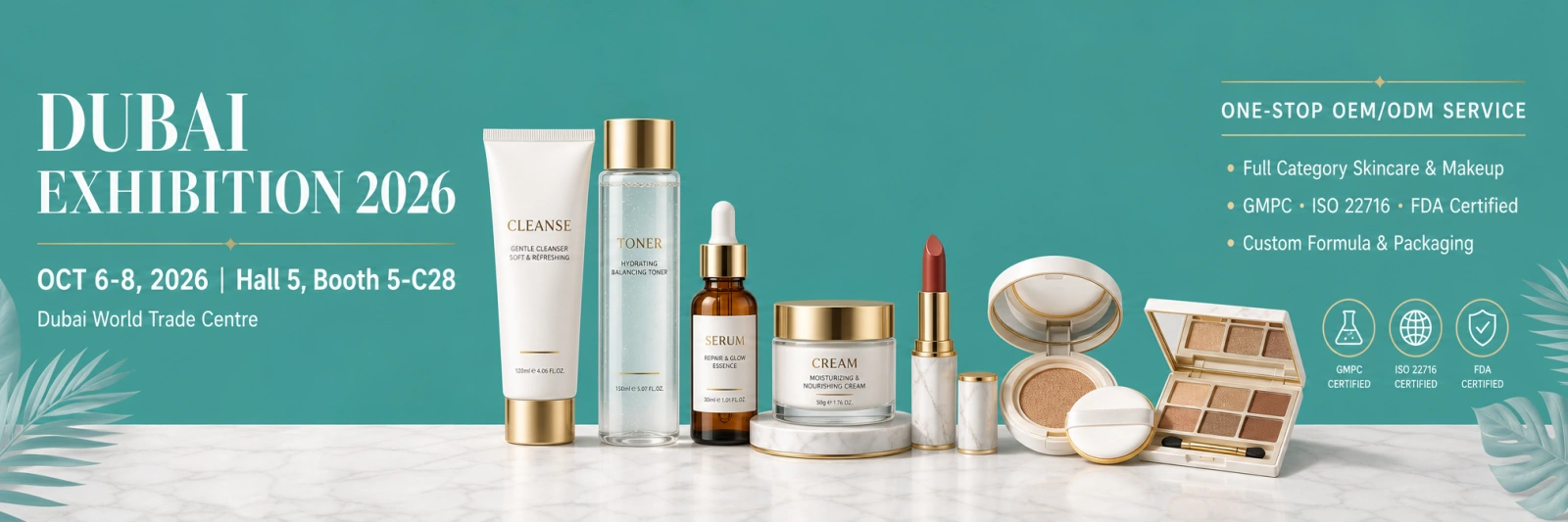
We run ODM and OEM lines side by side under ISO 22716 and GMPC in an FDA-registered facility. The honest numbers: stock-base samples in 24–48 hours, custom ODM sampling in 7–10 days, mass production in 30–35 days, and MOQ ladders at 3,000 / 5,000 / 1,000 pieces by format. Typical ODM projects on the floor right now include a brightening serum program for a Gulf distributor and a collagen eye mask line for a European retail chain — see the 377 whitening serum and the crystal collagen eye mask for what those look like as finished pages.
Ready to compare an ODM plan against your current quote? Send the brief — we answer with MOQ, timeline and file status in 24 hours.
☎ Phone / WhatsApp: +86 133 6440 1300
✉ Email: sales@moksha-bio.com
🕐 Working Hours: Monday – Saturday, 9:00 – 18:00 (GMT+8)
✉ Request the Quote — Reply Within 24h📍 Book a Factory VisitFrequently Asked Questions
What is the typical MOQ for ODM skincare manufacturing?
It follows the packaging format: about 3,000 pcs for 15–99 ml bottles and tubes, 5,000 pcs for small jars and sachets, and 1,000 pcs for large formats of 100 ml and above. Stock components keep minimums low; custom molded parts raise them.
How long does ODM sampling and bulk production take?
Stock-base samples ship in 24–48 hours, custom ODM adjustments take 7–10 days per round, and mass production runs 30–35 days from sample approval and deposit. Freezing artwork early is what keeps the calendar.
Does ODM include compliance files for the US and EU?
A full-service ODM supplier prepares the formulation breakdown and safety-assessment inputs for CPNP (EU) and MoCRA (US) notification. Always confirm who signs the safety assessment and how long the file takes before you pay the deposit.
Keep reading: private label skin care manufacturer: 8 cost lines · private label skin care manufacturer · 377 whitening serum OEM
No Comments