


11 Sep Logistics Safety: Fragrance & Serum Export Guide 2026
Logistics Safety for Fragrance Export: Navigating International Dangerous Goods Protocols
For brand owners and wholesale distributors specializing in high-end perfumery and concentrated serums, the factory gate is not the finish line—it is the start of a critical logistical journey. Achieving absolute Logistics Safety for Fragrance Export is the primary barrier to maintaining a reliable global supply chain. Fragrances, due to their high alcohol content, are classified as “Dangerous Goods” (Class 3 Flammable Liquids) by international aviation and maritime authorities. Failure to adhere to these strict protocols can lead to heavy fines, shipment seizures at the customs of the USA, Brazil, or the EU, and catastrophic damage to your brand’s reputation.
As a global fulfillment-specialized GMPC facility, MOKSHA has integrated rigorous export safety standards into our end-of-line operations. We provide our B2B partners with a transparent skincare shipping regulations roadmap, ensuring that every pallet of fragrances or active serums is pre-certified for global transit. This guide deconstructs the essential safety pillars of 2026 to help your brand maintain its logistical integrity and market dominance.
The Pillar of Compliance: MSDS and IATA Dangerous Goods Standards
The foundation of Logistics Safety for Fragrance Export is the Material Safety Data Sheet (MSDS). Every shipment must be accompanied by an up-to-date MSDS that accurately details the flash point, chemical stability, and emergency handling procedures. For air freight, these documents must align perfectly with the IATA Dangerous Goods Regulations (DGR). You can verify the latest technical packaging requirements and classification codes directly on the official IATA portal.
| Safety Component | Technical Requirement | Wholesaler Strategic Advice |
|---|---|---|
| Class 3 Classification | Applies to liquids with a flashpoint < 60°C. | Ensure your perfume OEM factory provides a Class 3 MSDS. |
| UN Packaging Code | Mandatory “UN” stamped outer crates. | Never use standard boxes for fragrances; they fail drop tests. |
| Activity Stabilization | UV-protective liners for high-potency serums. | Essential for Vitamin C and Retinol batches. |
(Source: IATA Dangerous Goods Regulations & Global Logistics Safety Standards, 2025)
Worried about fragrance export risks? Get a free logistics safety audit for your SKU and a factory-direct quote for global fulfillment. Start Your Logistics Audit →
Packaging Engineering: The UN Certified Export Boxes
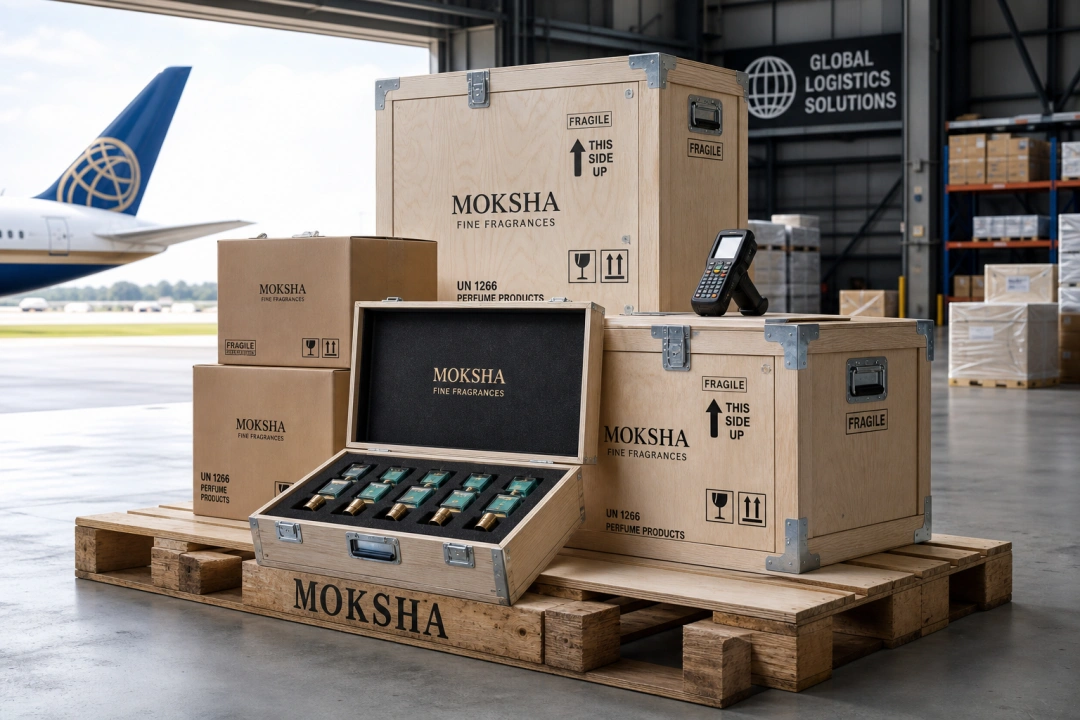
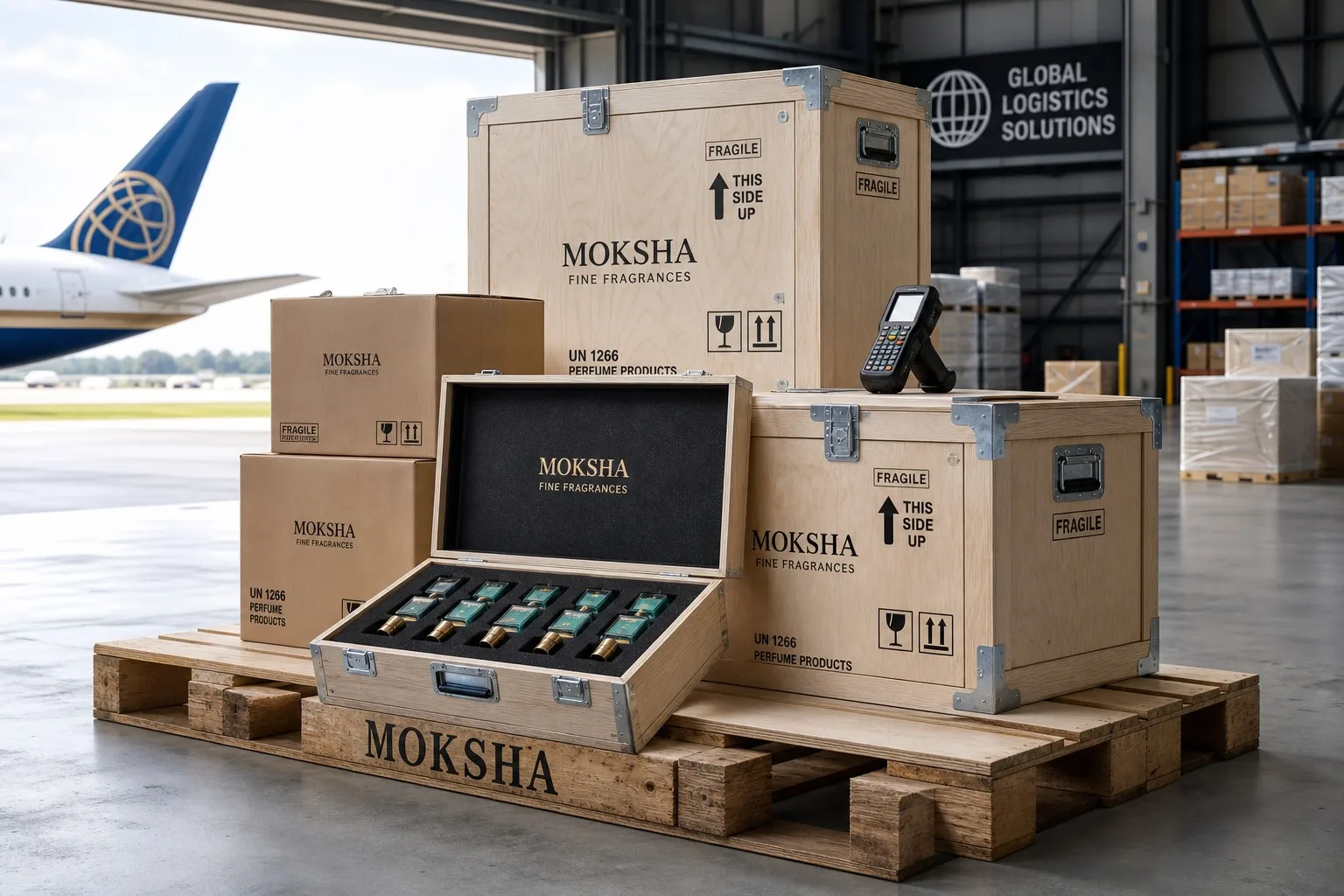
The core of Logistics Safety for Fragrance Export lies in the physical integrity of the outer packaging. UN certified export boxes are specifically engineered to withstand internal pressure changes during flight and external impact during maritime transit. Our facility utilizes double-wall corrugated fiberboard with specialized foam cushioning designed for glass bottle protection. By choosing a partner that prioritizes dangerous goods cosmetic packaging, you eliminate the risk of batch leakages—which can lead to entire container rejections and expensive hazardous waste cleanup fees.
Temperature Controlled Skincare Logistics: Preserving Serum Efficacy
While fragrances demand fire-safety protocols, high-concentration active serums require protection from environmental stressors. Achieving total Logistics Safety for Fragrance Export must also extend to temperature and UV stability for concentrated skincare batches. Active ingredients like Vitamin C, Retinol, and Peptide complexes are highly sensitive to thermal fluctuations, which can lead to oxidation and loss of efficacy before the product reaches the warehouse in Canada or the USA.
Our temperature controlled skincare logistics strategy includes the use of thermal-reflective pallet covers and specialized sea-freight reefer containers when necessary. By maintaining a stable environment during the 15-25 day transit window, we ensure that your Wholesale Skincare Production remains as potent as the day it was emulsified. This technical attention to detail is what separates a world-class OEM factory from a standard manufacturer, providing the scientific assurance your B2B clients demand.
Customs Clearance Hacks: Navigating the Global Gateway
The final hurdle in Logistics Safety for Fragrance Export is the customs gateway. Authorities in Brazil (ANVISA) and the EU (CPNP) are particularly vigilant regarding the import of flammable liquids and high-active cosmetics. A single missing UN certificate or an inaccurate flashpoint declaration on the MSDS can lead to month-long impoundments. At MOKSHA, our export documentation team provides a “Customs Pre-Check” service, ensuring all localized Portuguese or European labeling requirements are met before the cargo leaves the factory floor. This proactive skincare shipping regulations alignment reduces the risk of administrative delays by 85%.
Factory Snapshot: MOKSHA operates a Tier-1 export logistics center with a 180,000+ daily production capacity. Our facility is certified for the handling of Class 3 Flammable Goods and high-stability serums, serving premium brands in over 30 countries. We maintain long-term partnerships with DHL, FedEx, and global sea carriers to ensure priority handling for our B2B clients. Explore our global fulfillment capabilities →
Strategic FAQ: Critical B2B Questions for Export Logistics Safety
Q1: What is the maximum volume of fragrance I can ship via air freight?
A: For Class 3 Dangerous Goods, air freight is limited to specific “Limited Quantities” (LQ) per package. We utilize specialized UN-certified boxes that maximize your shipment density while staying within IATA safety limits.
Q2: How much extra do UN-certified export boxes cost?
A: While specialized packaging adds approximately 5-10% to the total packaging budget, it eliminates the risk of $10,000+ hazardous spill cleanup fees and shipment seizures.
Q3: Does MOKSHA provide the necessary MSDS for Brazil and the EU?
A: Yes, we provide comprehensive, laboratory-verified Material Safety Data Sheets (MSDS) in English and Portuguese to ensure smooth customs clearance in São Paulo and Santos.
Q4: Can I request free samples for stability testing in my target country?
A: Absolutely. We provide 3-5 units of prototypes for evaluation. For custom formulas, a nominal R&D fee of $200-$500 is charged, which is fully credited back toward your mass production order.
Q5: How do you protect glass fragrance bottles from breaking during transit?
A: We use custom-molded high-density foam inserts and double-wall corrugated UN boxes designed specifically for Logistics Safety for Fragrance Export.
Conclusion: Securing Your Global Supply Chain
Achieving Logistics Safety for Fragrance Export is a technical challenge that requires a specialist partner. By prioritizing UN-certified packaging, MSDS accuracy, and temperature-controlled handling, you transform your logistical hurdles into a stable growth engine. Partner with a factory that provides industrial scale and global safety transparency to secure your brand’s future in the USA, EU, and Brazil.
Secure Your Global Shipments Today
Request a logistics safety audit and a factory-direct quote for your fragrance or serum line within 48 hours.
Official WhatsApp: +86-1336-440-1300
No Comments