


23 Nov Double Layer Serum OEM: 8 Cost Lines Explained
A brand came to us last quarter with a double layer serum oem quote from another factory: USD 0.98 a unit FOB for a 30 ml two-phase serum. It looked unbeatable until the first mass batch, when the two phases came out of the filling line as one murky blend and 8,000 units went to rework. The quote had priced a serum; it had not priced the physics of a double layer serum oem program. Here are the eight lines that should have been on it.
None of the eight is exotic. All eight are cheap to fix in sampling and expensive to fix after the purchase order — which is exactly why a two phase serum manufacturer should put them on the table first.
Table of Contents
Line 1: Two-Phase Filling
A double layer serum is two immiscible phases — an oil layer carrying the lipid actives over a water layer carrying the botanicals — filled sequentially into the same bottle. The line time nearly doubles a normal serum fill, the density split has to be validated per batch, and the layer ratio (we run 1:1 to 2:1 by brief) is a specification, not a look. Any serum oem moq quote that ignores fill sequence is pricing a single-phase product with a nicer story.
Line 2: Bottle, Dropper and Shake Cap
Shake-before-use is the whole point of the format, so the closure matters: a standard dropper re-mixes poorly, while a ball-agitator cap or a wide-bore dropper does the job. Stock 30 ml glass with a standard dropper keeps the component cheap; a tooled shake cap is a 5,000 pcs conversation. A double layer serum oem brief that leaves the closure open is leaving the launch mechanism open too.
Send your layer brief and target market — we will return a quotation with the filling plan, MOQ ladder and free samples within 24 hours.
Line 3: The Actives
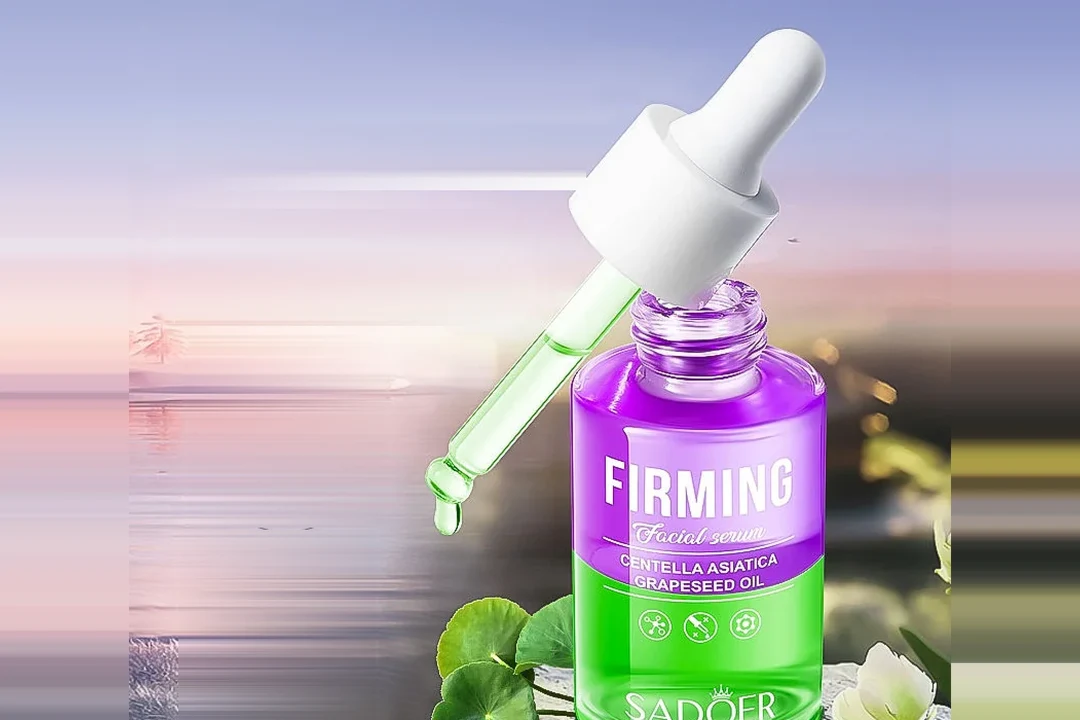
On this 30 ml program the water phase carries centella asiatica extract — the centella barrier study (PMC11663375) shows centella lotions reducing UV-induced DNA photodimers by roughly 28% and supporting barrier recovery within 24 hours — and the oil layer carries cold-pressed grapeseed oil. Assay grades move the number: a standardized centella extract costs more per kilo than a raw powder, and a centella serum oem quote should name the assay, not just the plant.
Line 4: Stability and the Shake Test
Two phases that separate too cleanly never remix; two phases that emulsify in transit stop being a double layer. The spec needs a 45 °C / 90-day run in the actual bottle, a freeze-thaw cycle, and a shake-recovery test that measures how many inversions return the oil to a clean layer. For a grapeseed face serum private label program, that one test is the difference between a signature format and a returns queue.
Line 5: Carton and Artwork
A printed carton on a new dieline adds a proof round and moves the tier from stock to printed. Freeze panel text before sampling: two proof rounds cost more calendar time than any factory loses on filling. The shake-before-use instruction belongs on the carton, not buried in a leaflet — users who never shake see two flat layers and file complaints.
Line 6: Documents and Registration
The EU needs a PIF with a safety assessor and a CPNP notification per SKU under Regulation (EC) 1223/2009; the US needs MoCRA facility registration and product listing; Indonesia adds BPJPH halal. These are line items, not afterthoughts — a two phase serum manufacturer who cannot produce a draft PIF is selling you a formula you cannot legally ship.
Line 7: Freight and Duty
Glass bottles of 30 ml serum ship heavy: budget for the weight, not the units. Duty differs by market — the EU and US take single-digit percentages on cosmetics, Brazil stacks import duty on top of ICMS and the paperwork can double dwell time. A landed-cost line in the quote beats an FOB number you have to defend to your finance team later.
Line 8: Sampling and the Artwork Clock
Samples ship in 7–10 days and the fee credits against the first order; bulk runs 15–25 days after artwork lock, 30–35 days door to door. The clock that hurts is artwork — freeze the panel text, the layer ratio and the closure in the same week, and the double layer serum oem program keeps its launch date.
| Cost line | What moves it | Failure it removes |
|---|---|---|
| Two-phase filling | Layer ratio, fill sequence, density split | One murky blend out of the line |
| Bottle and closure | Stock vs tooled shake cap | A format that never remixes |
| Actives | Centella assay, oil grade | A story the formula cannot carry |
| Stability | 45°C/90 days + shake recovery | Phases that never recombine |
| Carton | Printed dieline, proof rounds | A month lost per revision |
| Documents | PIF, CPNP, MoCRA, halal | A formula you cannot ship |
| Freight and duty | Glass weight, market regime | Landed cost surprises |
| Sampling | 7–10 days, artwork frozen | A launch date that slips |
Eight lines, one auditable number. When a double layer serum oem quote shows the filling plan, the closure, the assay, the stability test, the carton, the files, the freight and the clock, the price stops being a negotiation and becomes a specification. Our double layer serum page shows the finished centella + grapeseed 30 ml spec on the 3,000 pcs tier — the same economics apply to any grapeseed face serum private label run at this fill — and the OEM cost structure page maps the same eight lines onto any category, including where the serum oem moq tier changes with the closure you pick.
Send your layer brief, target market and pack direction — we will return a quotation with the filling plan, MOQ ladder and free samples within 24 hours.
☎ Phone / WhatsApp: +86 133 6440 1300
✉ Email: [email protected]
🕐 Working Hours: Monday – Saturday, 9:00 – 18:00 (GMT+8)
✉ Request the Quote — Reply Within 24h📍 Book a Factory VisitFrequently Asked Questions
What is the MOQ for a double layer serum OEM program?
3,000 pcs per SKU on the 30 ml stock bottle with a standard dropper; a tooled shake-before-use cap or a printed dieline moves the tier to 5,000. Samples ship in 7–10 days and the fee credits against the first order.
Why does a two-phase serum cost more to fill than a normal serum?
The two phases are filled sequentially with a validated density split, which nearly doubles line time and adds a shake-recovery test per batch. A two phase serum manufacturer who quotes single-phase filling prices is quoting a product that cannot hold two layers in the bottle.
How do you keep the two layers from mixing in transit?
Choose phases with a real density gap, validate the ratio per batch, and run a 45 °C / 90-day stability plus freeze-thaw and shake-recovery tests in the actual bottle. Ask for the shake test report before you approve artwork on any centella serum oem program.
Keep reading: Double Layer Serum OEM 30 ml Centella Grapeseed · Centella Asiatica Face Serum OEM · Grape Seed Face Serum OEM 30 ml · Skincare OEM Cost Structure · Get a Custom Quote
Sorry, the comment form is closed at this time.