



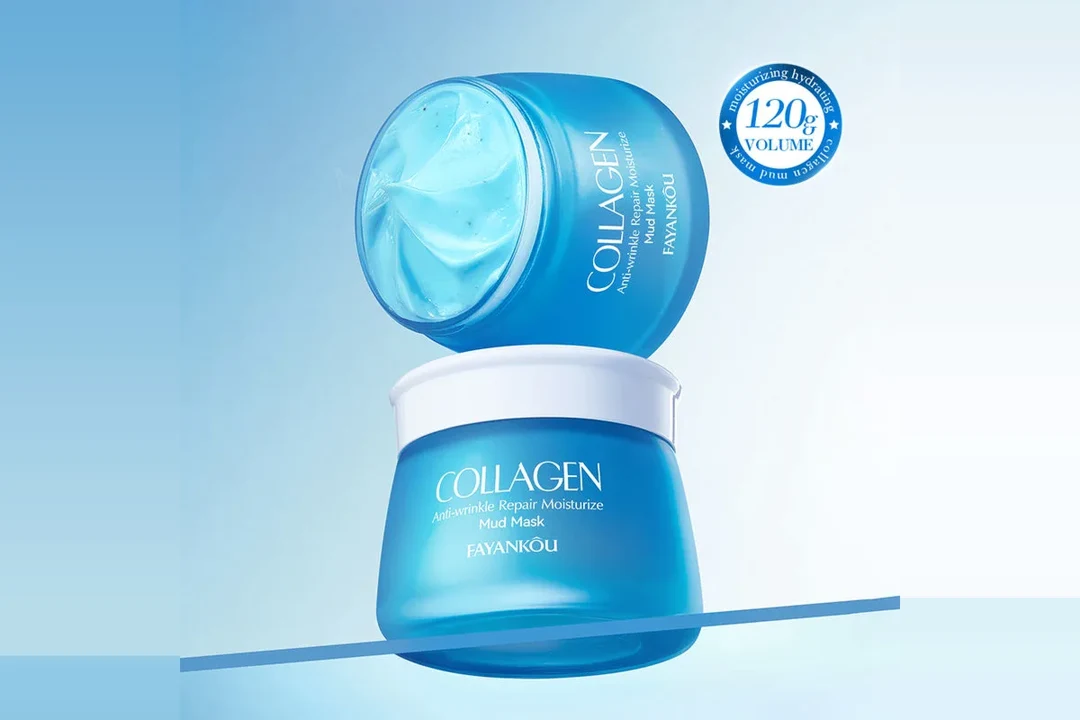
23 Nov Collagen Mud Mask OEM: 5 Batch Failures We Fixed
Every collagen mud mask oem program we run starts with a brief that looks simple: a 120 g jar, kaolin base, a collagen story, a purifying claim, 1,000 pcs to test the market. The program we rescued last spring had already been through one factory and one returned batch when it reached us — the mud had cracked and pulled away from the jar wall within three weeks on the buyer’s shelf. Five fixes turned it into the repeat-order product it is today, and every one of them is cheap before the PO and brutal after it.
If you are briefing a mud mask manufacturer this quarter, this is the failure list to hand them.
Table of Contents
Failure 1: Mud That Cracked in the Jar
Clay masks shrink as they dry, and a water-heavy formula shrinks fastest. The first factory had chased a soft texture with too much water and too little binder, so the mud pulled from the walls like a drying riverbed. We rebalanced the humectant-to-clay ratio and added a film former that keeps the matrix flexible — and specified a 45 °C / 90-day open-close aging test in the actual jar. A collagen clay mask private label program without that test is shipping a cosmetic defect schedule.
Failure 2: A Mask That Dried Out in Four Minutes
The buyer’s testers hated the first formula not for what it did but for how fast it quit: the mud set solid in four minutes, so the massage ritual died. Kaolin and bentonite carry most of the oil-absorbing work — the kaolin mask clinical (PMC10626287) measured a 68.97% drop in skin oiliness after the very first use and a 65.77% reduction in open comedones at week four with twice-weekly use — but the experience window is set by the humectants and occlusives around them. A purifying mask oem moq brief should specify a working time, not just a jar size.
Send your mud mask brief and target market — we will return a quotation with the working-time spec, MOQ ladder and free samples within 24 hours.
Failure 3: Grit in the Batch
Batch two had grains. The cause was hydration order, not quality: kaolin added too fast hydrates unevenly and leaves nodules that no amount of mixing repairs. We moved to pre-dispersed clay slurry, tightened the mesh spec on the powder, and added a visible-particle check on every batch record. Grit in a clay mask oem batch is a return, not a footnote — buyers feel it before they read the label.
Failure 4: pH Drift Past the Comfort Line
Clay is alkaline; a fresh batch drifted from pH 7.2 to 8.6 within a month as the buffer was consumed, and the tingling complaints followed. The fix was a buffered system held in a 5.5–6.5 window, written as a range into the batch record and checked on the finished fill. The clay mask market runs from USD 1,134M in 2025 toward 1,715M by 2032 with kaolin near 45.6% of it — the growth buys nothing if every third jar tingles.
Failure 5: The Cap That Clogged
A 120 g jar with a narrow-thread cap packed mud into the thread within a week of bathroom use. We widened the thread pitch, added a sealing liner and ran a 200-cycle open-close test with product in the thread. For a collagen mud mask oem program at 1,000 pcs, the cap is not packaging — it is the user’s daily handshake with the product.
| Failure | Root cause | What we changed |
|---|---|---|
| Cracked mud | Water-heavy ratio, weak binder | Humectant-film rebalance, jar aging test |
| Fast dry-out | No working-time spec | Humectant window, 8-minute target |
| Grit | Uneven clay hydration | Pre-dispersed slurry, mesh spec |
| pH drift | Unbuffered alkaline clay | pH 5.5–6.5 window on finished fill |
| Clogged cap | Narrow thread, no liner | Wider pitch, sealing liner, 200-cycle test |
Five fixes, none glamorous, and the program shipped on the 1,000 pcs tier with a mud that stays smooth to the last gram. That is what we mean when we say a collagen mud mask oem conversation should start with the failure list. Our collagen mud mask page shows the finished 120 g spec — the same binder and pH logic holds for any stick-format clay mask oem program — and the quality control page lists the batch tests behind every jar.
Send your mud mask brief, target market and jar size — we will return a quotation with the failure list closed, MOQ ladder and free samples within 24 hours.
☎ Phone / WhatsApp: +86 133 6440 1300
✉ Email: [email protected]
🕐 Working Hours: Monday – Saturday, 9:00 – 18:00 (GMT+8)
✉ Request the Quote — Reply Within 24h📍 Book a Factory VisitFrequently Asked Questions
What is the MOQ for a private label collagen mud mask?
1,000 pcs per SKU on the 120 g jar with a stock jar and cap, 3,000 with a printed carton and 5,000 with a tooled component. Samples ship in 7–10 days and the fee credits against the first order — the ladder follows the fill size on any mud mask manufacturer quote.
How do you stop a clay mask from cracking in the jar?
Balance the humectant-to-clay ratio, add a flexible film former, and run a 45 °C / 90-day open-close aging test in the actual jar. Our stance: a collagen clay mask private label program that skips the jar-aging test is scheduling its own returns.
How long does sampling and bulk production take?
Samples in 7–10 days, bulk in 15–25 days after artwork lock, or 30–35 days door to door. Ask any purifying mask oem moq supplier for the batch record from a recent mud run — the pH window and particle check tell you more than the certificate on the wall.
Keep reading: Collagen Mud Mask OEM 120 g Jar · Green Tea Clay Mask Stick OEM · Mugwort Clay Mask Stick OEM · Cosmetic Quality Control · Get a Custom Quote
Sorry, the comment form is closed at this time.